Beyond the Ledger: Why Expense Architecture Defines Solo Business Longevity Perspective Shift: True financial independence for solo operators isn’t just about scaling top-line revenue; it is about engineering a resilient operational foundation that withstands market volatility. Table of Contents The Invisible Leak: Where Solo Operators Lose Financial Control Redefining Overhead: From Cost Centers to Growth Catalysts The Psychology of Transparent Financial Discipline Building an Antifragile Solo Enterprise Model When independent professionals launch into the digital economy, the primary obsession is almost always expansion—securing new clients, launching digital assets, and scaling hourly or project rates. Yet, a silent variable dictates whether a solo business thrives or stagnates: the architectural integrity of its operational overhead. Viewing expense tracking as a mere annual tax obligation misses its true strategic value. In practice, how you monitor, categorize...
Get link
Facebook
X
Pinterest
Email
Other Apps
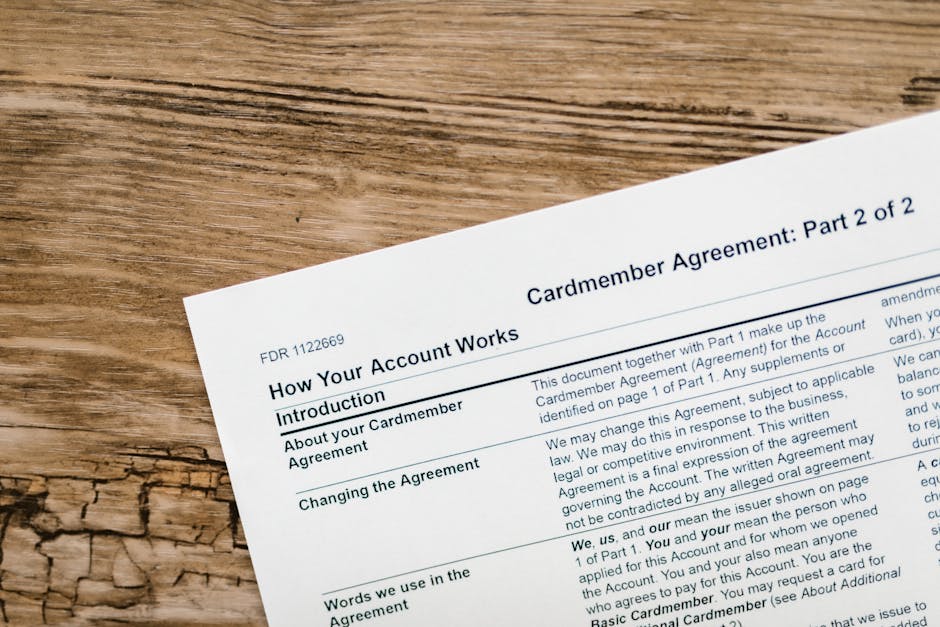
Payment Terms Freelance: A Practical Guide to Protect Cash Flow
Get link
Facebook
X
Pinterest
Email
Other Apps
-
Note: General business guidance only—not legal, tax, or financial advice. Verify details with official sources and qualified professionals.
Step-by-Step: Setting Payment Terms That Protect Cash Flow
Protective payment terms combine clear timing, partial upfront funding, and enforceable consequences for late payment. — The following sequence helps translate that principle into contract language you can reuse across projects.
Unlike regulated schemes such as Simply tenancy deposit protection—where third parties hold tenant funds in approved accounts—freelance deposits remain governed entirely by private contract. — No statutory custodian guarantees return of your upfront payment if a dispute arises.
Each element above should appear in the same document as scope and timeline. — Scattering payment rules across emails invites the very ambiguity that delays payment in the first place.
Define the payment structure before scope details expand. Decide whether the project suits a flat fee, hourly billing, or milestone payments. Milestone payments tie each installment to a defined deliverable—such as wireframes, a first draft, or a final export—so cash arrives as value is produced rather than after full completion.
Require a deposit before work starts. A deposit—typically twenty-five to fifty percent of the total fee—covers initial labor and signals client commitment. In international trade, cash-in-advance terms eliminate credit risk because payment is received before ownership or deliverables transfer; freelance deposits apply the same logic at project scale.
Specify invoice triggers and due dates in writing. State whether payment is due on receipt, within fifteen days, or on net 30 terms. If accepting net 30, note the invoice submission date that starts the clock and require a valid purchase order or approval reference so accounts payable cannot reject the invoice on technical grounds.
Attach a late fee and interest clause. A late fee—often one and a half percent per month on the overdue balance—creates a documented cost for delayed payment. Even when clients rarely pay the fee itself, the clause strengthens your position in collections and signals that timeliness is contractual, not optional.
Limit revision rounds and approval windows. Cap the number of included revisions and set a fixed number of business days for client feedback. Silence after that period can be defined as acceptance, preventing indefinite holds on milestone release.
Document kill fees and pause terms. If a client cancels mid-project, specify what percentage of remaining work is billable. If a project pauses at the client’s request, state whether billing continues or whether a restart deposit is required to resume.
Align payment method with speed. Prefer ACH or wire transfer over checks when possible. Include who pays processing fees and whether retainers auto-renew for ongoing engagements.
Before you start, use this practical checklist for payment terms freelance and confirm the latest steps on official sites. That difference makes precise written terms, signed before any work begins, essential rather than optional.
Common Mistakes in Freelance Payment Term Negotiations
— A lot of freelancers undercut their own cash flow during negotiation by treating payment terms as secondary to winning the project.
Accepting the client’s standard payable cycle without adjustment is among the most frequent errors I see. — Corporate net 30 language may suit a vendor with reserves; it may not suit a solo operator funding production costs today.
Another mistake is collecting a deposit verbally but failing to tie it to a signed agreement. — Without a document linking the deposit to a defined scope, refund obligations and ownership of work-in-progress remain unclear.
Similarly, marking milestones without objective completion criteria leads to disputes that freeze the next installment. — “First draft” should reference format, length, and delivery channel—not a subjective standard open to endless rework.
freelancers also weaken terms by omitting late fee language out of fear of seeming aggressive. — In practice, a reasonable late fee protects both parties by making expectations explicit.
waiting until delivery to send the first invoice is another costly habit. — If all compensation is back-loaded, the freelancer bears one hundred percent of timing risk.
That said, failing to reconcile payment terms with project type creates mismatches. — A six-month retainer with monthly billing needs different protections than a fixed-price brand identity package.
So, reviewing past projects where payment arrived late often reveals which of these patterns applied. — Correcting them in the next proposal costs nothing upfront and can shorten receivable cycles substantially—you'll thank yourself when the next invoice lands on time.
Clients with functioning payable systems rarely trigger the clause; those with chronic delays expose the freelancer to repeated cash gaps without recourse.
Laws such as California SB 988 and New York’s Freelance Isn’t Free Act impose payment deadlines after work is performed, but enforcement still requires documentation, follow-up, and sometimes formal complaints.
Preventive structure reduces reliance on reactive remedies—This is a crucial step people often overlook.
Applying a generic template without adjusting deposit size, milestone count, or approval windows leaves gaps that appear only when cash runs short.
What to Do Next: Turn Payment Terms Into Enforceable Agreements
The final step is embedding negotiated terms into a single signed document before any billable work begins. — Illinois’s published Freelance Work Agreement illustrates how hiring entities and workers can record party names, services, rate, payment amount, and due date in one place.
Start from a master template that includes deposit percentage, milestone schedule, net terms, late fee rate, approval windows, and cancellation language. — Customize only the sections that change per project—fee, timeline, and deliverable list—so core protections stay consistent.
Send the agreement with your proposal or statement of work, not after selection when leverage is lower. — Pair the document with a brief cover note explaining that payment terms support reliable scheduling and on-time delivery.
When a hiring party resists a deposit, propose a smaller initial installment tied to a concrete first deliverable rather than eliminating upfront payment entirely. — When net 30 is non-negotiable, request partial milestone payments during the project so no single invoice represents the majority of your fee.
Store executed agreements, invoice copies, and delivery confirmations in one folder per client. — If payment is delayed beyond the stated term plus any grace period, send a written reminder referencing the contract section on due dates and late fees.
Payment terms are not a one-time negotiation; they are a recurring business system. — Revisit them annually, after any late payment, and whenever project size or duration increases.
Use a comparable structure even when no state form is required in your jurisdiction.
Consistency reduces errors and speeds review because repeat clients already understand your billing rhythm.
Framing terms as operational requirements rather than personal preferences often improves acceptance among procurement teams accustomed to vendor contracts.
Track invoice submission dates and follow up before due dates, not only after them.
Escalation paths—including small claims court or agency complaints where local freelance laws apply—depend on the written record you maintain from day one.
Each revision strengthens the link between completed work and timely cash—so the next engagement starts from a position of clarity rather than hope.
(Updated: 2026.07.04)
Frequently Asked Questions
How do I set payment terms clients actually follow?
Net 14 or Net 30 with a late fee clause works for many solo clients. Put terms in the contract and repeat them on the invoice footer.
What is the simplest filing system for freelance paperwork?
Use year folders with subfolders for income, expenses, contracts, and taxes. Name files with date and vendor so search finds them quickly.
What belongs on a freelance invoice before I send it?
Include your legal name, client name, invoice number, line items, payment terms, and due date. Match the fields your client’s AP team expects.
Should freelancers use a separate business bank account?
Yes—separate accounts simplify taxes and prove business income. Open one after your first paid project or before tax season.
How long should freelancers keep business records?
Keep tax-related records for at least the period your country requires—often three to seven years. Store digital copies in a backed-up folder.
Official Sources
Use these 3 authoritative links to verify requirements in your area.
IRS offers reference material you can cross-check for Payment Terms.IRS
See sba.gov for current Payment Terms requirements.sba.gov
USA.gov offers reference material you can cross-check for Payment Terms.USA.gov
Rules can change — confirm details on each official site before you apply.
Note: General business guidance only—not legal, tax, or financial advice. Verify details with official sources and qualified professionals. Table of Contents What Daily Self-Employed Records Actually Cover How to Set Up a Folder Structure You Can Apply Today How to Track Income Every Day Without Gaps What Receipts to Save and How to Organize Them How to Build a Mileage Log You Can Check Weekly What Is a Spreadsheet Log vs What Is Accounting Software When to Choose Spreadsheets vs Accounting Apps Using Paper and Digital Records Together Self-employed records are the receipts, logs, and income notes you touch every day—not a pile you rebuild in March. If you run a side gig, freelance work, or a sole proprietorship, a short daily habit keeps tax prep honest and boring in a good way. Below is what I actually track, how I folder it, and where common tools break (including Google services). What Daily Self-Employed Records Actually Cover Daily record keeping means capturing money in, mo...
Note: Based on publicly available guides; verify details on official sites. Table of Contents What Is a Domain Property in Search Console When to Choose Domain Property vs URL-Prefix Property Verify Website Ownership Google Accepts for Portfolio Sites Check If Pages Are Indexed and Fix Common Portfolio Blocks Before you start, follow this plain-English walkthrough for how to set up google search console and confirm the latest steps on the official site. Google Search Console is the free dashboard Google gives you to see whether your freelance portfolio shows up in search—and to fix it when it does not. I set mine up in one sitting with a custom domain and a handful of project pages, and the hardest part was picking the right property type, not the technical steps. This walkthrough covers sign-up, ownership verification, sitemap submission, and the checks I still run monthly as a solo business owner. What Is a Domain Property in Search Console Google Search Console is a free servic...
Note: General business guidance only—not legal, tax, or financial advice. Verify details with official sources and qualified professionals. Table of Contents What Is the GST/HST Quick Method and Who Can Use It? How to Prepare for GST HST Quick Method Canada Setup How to Complete and Submit the CRA Quick Method Election Form GST74 What Are the Quick Method Remittance Rates and How Do They Work? Quick Method vs. Standard Method: Which Is Right for Your Business? Common Mistakes to Avoid When Setting Up the Quick Method Setting up the GST/HST Quick Method in Canada can simplify your small business accounting by letting you remit a reduced percentage of your taxable sales. This guide walks you through the eligibility requirements, the CRA Quick Method election form GST74, and how to apply. What Is the GST/HST Quick Method and Who Can Use It? The Quick Method is a simplified accounting option for small businesses that reduces the amount of GST/HST you remit on taxable supplies. Instea...



Comments
Post a Comment